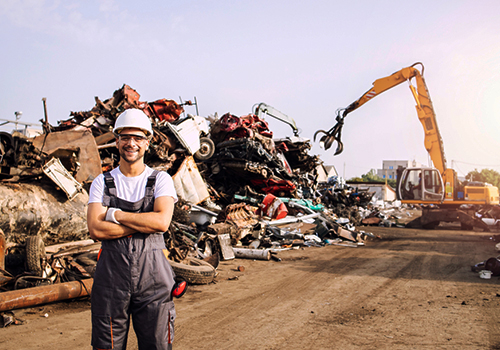
Every factory has one.
That messy corner.
Offcuts stacked against a wall. Bent brackets. Metal shavings in buckets. A pile that mushrooms from small to big. The temporary drop zone becomes a permanent dumping ground.
It blocks access. It looks unprofessional. And it silently drags down your workflow. Workers lose minutes stepping over the sweat sock or trying toss aside some scrap to access tools and material. In the end, those tiny lags amount to real productivity loss.
The fix is simple. Where possible, deposit the waste where it’s produced. That’s where a well-placed tipping bin can make all the difference.
The Actual Problem: Waste Outside of a System
Scrap accumulates because scrap has no obvious home.
Operators finish a cut. The offcut is dropped nearby “for now.” Shavings collect in trays. Someone says they’ll move it later.
Later rarely comes.
Soon, you have:
- Cluttered walkways
- Unsafe trip hazards
- Delayed clean-up
- Lost production time
Supervisors begin reminding employees to clean up, and without a system in place, the mess comes right back within hours. The challenge isn’t laziness, but rather the absence of a system to dispose of waste as you produce it.
Mess is not just visual. It disrupts flow.
Put the Bin at the Source
The smartest solution? Position a tipping bin directly underneath or at the side of your scrap generating machine.
- Under the CNC machine
- Next to the cold saw
- Beside the press
There is no temporary pile when the waste goes straight into a bin.
No “we’ll move that later.”
Scrap goes directly from machine to containment.
This small change minimises obstruction in aisles and eliminates manual work.
How It Improves Workflow?
Factory productivity depends on movement. Materials flow in, products flow out. Workers move efficiently.
Loose scrap interrupts that system.
Tipping bins can also be a great storage solution and when thoughtfully placed on your factory floor will keep you organised, not slow you down!
Here’s how:
- Waste remain confined at one place
- Full bins can be emptied quickly using forklifts
- Operators don’t have to leave stations to clean up
- The cleaning fits into the normal loop
There is no waiting for a clean-up day − waste removal happens all throughout.
Safer Floors, Fewer Incidents
Metal offcuts are sharp.
Shavings scatter easily. Long lengths create trip hazards.
A controlled tip bin minimises contact with loose debris. Workers do not have to hop over steel scraps on their way to equipment.
Safety improves because:
- Walkways stay clear
- Waste is separated from production areas
- Manual lifting is reduced
- Clean-up mechanically, do not use hand
With forklifts doing the lifting, stress injuries fall.
And that’s where specially-designed forklift tipping bins come in. They permit operators to pick-up, transport and dump scrap with ease without cat climbing or manual dumping.
More Productivity with Less Sorting
Piles of scrap is generally needed to be sorted.
It takes longer to process the mixed waste.
Positioning bins at source permits a team to map each bin for:
- Steel offcuts
- Aluminium scrap
- Swarf and shavings
Segregation at the point of collection both accelerates recycling and minimises confusion about what can be thrown away.
Time saved on sifting is time gained for core production.
The Professional Edge
Visitors notice messy corners.
So, do safety inspectors.
Forklift tipping bins that are well placed demonstrate to your business that their operation is organised and controlled.
It signals:
- Workflow planning
- Compliance awareness
- Efficient material handling
That’s important for audits and the impression they give clients.
Small Change, Big Impact
The problem of scrap metal pile-up is not complex.
It’s about placement and habit.
Place a sturdy tipping bin in the right location. Incorporate waste management into the production process rather than leftover.
The moment you have scrap falling into the bin rather being thrown to the floor, your whole factory feels different.
Cleaner. Safer. Faster.
And that messy corner?
Gone.


