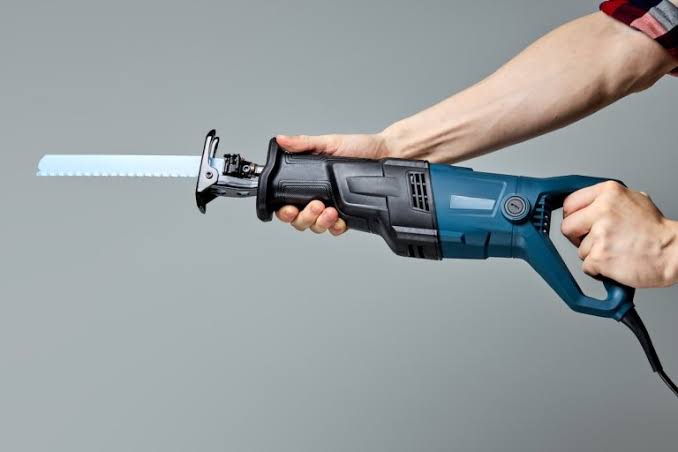
When it comes to demolition and renovation, few tools deliver the raw cutting power that professionals and serious DIYers demand. Whether you’re tearing through drywall, slicing old piping, or breaking down structural timber, reciprocating saws have earned their reputation as one of the most indispensable tools on any job site. Choosing the right one, however, requires more than picking the first option you find on a shelf. The market is full of models with different power ratings, stroke lengths, blade compatibility, and ergonomic designs—each suited to different tasks and users.
This guide walks you through everything worth knowing before making a purchase decision.
Why Reciprocating Saws Are a Demolition Essential
The push-pull motion of a reciprocating saw makes it uniquely suited to aggressive cutting tasks. Unlike circular saws or jigsaws, which require clean surfaces and precise setups, this tool thrives in messy, constrained, and unpredictable environments. Renovation sites are rarely tidy—walls come down in chunks, pipes are embedded in concrete, and nails hide inside timber frames. A well-chosen reciprocating saw cuts through all of it without hesitation.
The tool’s versatility also extends across materials. With the right blade, a single saw can handle wood, metal, plasterboard, PVC, and even ceramic tile. That cross-material capability is what makes it a staple in the toolkit of contractors, plumbers, electricians, and general builders alike.
Corded vs. Cordless: What Should You Choose?
This is often the first decision buyers face, and it matters more than most people realize.
Corded models deliver consistent, uninterrupted power. For heavy-duty demolition work—where you’re cutting continuously for extended periods—a corded saw eliminates the concern of battery drain mid-job. They tend to offer higher amperage and more sustained performance under load.
Cordless models, powered by lithium-ion battery platforms, have closed the performance gap significantly in recent years. Their biggest advantage is mobility. On renovation sites where power outlets are limited, or when working at height or in tight roof cavities, cordless saws allow movement without the constraint of a cable. Battery compatibility across a tool brand’s ecosystem is also a practical benefit—one battery platform often powers multiple tools on site.
The right choice depends on your work environment. For fixed-location demolition with power access, corded wins on raw output. For versatile, mobile use across different areas of a project, cordless is often the smarter long-term investment.
Understanding Stroke Length and Strokes Per Minute
Two key specifications define how a reciprocating saw performs: stroke length and strokes per minute (SPM).
Stroke length refers to how far the blade travels in each cutting cycle. A longer stroke length removes more material per pass, making it ideal for thick timber or dense materials. Shorter stroke lengths offer more control in precision cuts.
SPM refers to how fast the blade moves back and forth. Higher SPM settings are useful for softer materials like wood and drywall, where speed accelerates the work. For metal cutting, lower SPM settings with appropriate blades produce cleaner results and extend blade life.
Most quality reciprocating saws include variable speed triggers, giving the user control over both factors depending on the material and task at hand.
Blade Selection: The Detail That Changes Everything
The saw body is only half the equation. Blade choice determines cutting performance, finish quality, and tool longevity.
Wood-cutting blades feature wider, more aggressive teeth designed for fast material removal.
Metal-cutting blades have finer teeth and are made from bi-metal or carbide materials for durability against hard surfaces.
Demolition blades are built for mixed-material cutting—ideal when you’re unsure what’s inside a wall or floor.
Flush-cut blades allow cutting flush against a surface, useful for trimming door frames or removing protruding fixings.
Blade length should also match the material thickness. Using a blade that’s too short risks binding; too long and you lose control.
Orbital Action: Is It Worth It?
Many mid-to-high-tier reciprocating saws include an orbital action setting, where the blade moves in a slight elliptical motion rather than a straight push-pull. In wood and softer materials, orbital action significantly increases cutting speed because the blade scoops through material rather than just slicing it.
For metal cutting, orbital action should be switched off—it creates rough cuts and accelerates blade wear. The ability to toggle this feature on and off adds meaningful versatility to the tool.
Ergonomics and Vibration Control
Demolition work is physically demanding, and a reciprocating saw amplifies that demand. Extended sessions with a poorly balanced or high-vibration tool lead to fatigue and reduced accuracy.
Look for models with anti-vibration technology built into the handle and body. Rubber-over-mold grip surfaces also reduce hand fatigue on long cuts. A pivoting shoe—the metal foot at the base of the blade—allows the user to brace against the material for better control and reduces kickback.
Weight distribution matters too. A front-heavy saw becomes tiring quickly. Models with well-balanced weight tend to produce more consistent cutting lines, particularly in overhead or awkward-angle applications.
Tool-Free Blade Changes: A Practical Must-Have
Blade changes happen frequently on active job sites. A tool-free blade change mechanism—where you swap blades by hand without requiring a separate key or wrench—saves time and reduces frustration, particularly when working with gloves on. This feature is standard on most reputable models and should be considered non-negotiable for professional use.
Making the Right Choice for Your Project
Before purchasing, honestly assess the nature of your work. Occasional home renovation calls for a different specification than daily professional demolition. Consider the materials you’ll cut most frequently, whether a corded power source is reliably available, and how important battery ecosystem compatibility is across your existing tools.
Investing in the right reciprocating saw from the outset eliminates the compromise of working with an underpowered or ill-suited tool. The right saw doesn’t just complete the job—it makes every cut faster, safer, and more controlled.